4 Production and use in antiquity
4.1 Egyptian blue: development and use
4.1.1 The origins
EB was at frst used in glazes or as a solid material and only later in powdered form as a pigment (Forbes 1955; Riederer 1997). Although the hypothesis of a frst development in Mesopotamia cannot be completely ruled out (Moorey 1985; Ullrich 1987; Cavassa 2018), the early development of EB most likely took place in Egypt during the 4th millennium BCE (Berke 2007; Delamare 2007). The earliest known fndings of EB are as a constituent material of some beads and have been reported by Kaczmarczyk at the site of Abydos in a funerary context dating back to the period Naqada II in Hendrickx’s classifcation, i.e., 3500–3300 BCE (Bouquillon et al. 2007; Cavassa 2018). The frst use of EB as a pigment has been instead reported by Corcoran in the carving of a bowl of the late Egyptian predynastic period listed as Naqada IIIa1—roughly 3300 BCE (Corcoran 2016; Greco 2022). Since c. 2900 BCE, EB has been found also in Mesopotamia and Greece (Riederer 1997; Panagiotaki et al. 2004, 2015; Kakoulli 2009; Cavassa 2018).
The development of the manufacturing process of EB has been likely only possible thanks to the improvement of furnaces in the Early Bronze Age (Riederer 1997; Nicholson 2010). It occurred probably in parallel with the emergence of other furnace products, such as bronze (El Goresy et al. 1998; Gouda et al. 2020), lime (Gourdin and Kingery 1975; Philokyprou 2013), glazes, and at a later time glass that spread in Egypt only around 1500 BCE, i.e., roughly two millennia after the development of EB (Lilyquist et al. 1993; Paynter 2008; Nicholson 2012). The ancient materials most closely related to EB are, indeed, vitreous materials. Notably, EB shares similar qualitative chemical composition, and likely kind of required raw materials with the following ancient vitreous substances ranging in color between blue, pale blue, turquoise, and green:
(a) the glaze on some stones (i.e., quartz and steatite) that were already produced in the 5th millennium BCE or earlier (Paynter 2008; Nicholson 2012)
(b) the copper-containing glazes of some Egyptian and Mesopotamian faience widespread since the 5th–4th millennium BCE (Kaczmarczyk and Hedges 1983; Tite and Shortland 2003, 2008; Paynter 2008; Moussa and Ali 2013; Masic and Nicola 2021). It has been speculated that the development of EB may derive from the eforescence method of faience production in which the quartz body and glazing components are mixed together (Tite et al. 1987; Warner 2011). It may be worth noting that these glazes may consist not only of a colored glassy phase but also of a few embedded spicular crystals, similar but not identical to those in EB as observed in experiments on the incorporation of EB (Berke 2007). As shown in Fig. 13, these materials are so intimately linked to EB that both can have a very similar aspect (Masic and Nicola 2021)
(c) a peculiar ancient pigment referred to as Egyptian green, green frit, or turquoise frit and used mainly in Egypt since about 2200 BCE (Ullrich 1987; PagèsCamagna et al. 2006; Hatton et al. 2008; Scott 2016). It may be worth noting that Egyptian green features and production has been highly debated (Pagès-Camagna and Colinart 2003, 2006; Schiegl and El Goresy 2006). It seems however widely accepted that Egyptian green has not to be simply considered a misfred EB but it is a distinct pigment (Pagès-Camagna and Colinart 2003; Schiegl and El Goresy 2006; Hatton et al. 2008; Scott 2016). According to Pagès-Camagna et Colinart Egyptian green is largely constituted by a widespread Cu-rich glass phase containing also wollastonite and high-temperature polymorphs of silica, while, in general, cuprorivaite is absent (Pagès-Camagna and Colinart 2003; Hatton et al. 2008). Egyptian green is overall considered to have been produced at higher temperatures than EB and with a higher amount of fux and possibly of Ca-bearing compounds (Hatton et al. 2008). Grifa et al. report that Egyptian green has been produced also outside of Egypt, e.g., in Roman times in the city of Cumae in Southern Italy (Grifa et al. 2016). Perez-Rodriguez et al. report an example of use in Spain during Roman times (Perez-Rodriguez et al. 2015)
(d) some types of glass colored with copper that are widespread since the mid-2nd millennium BCE (Lucas and Harris 1962; Lilyquist et al. 1993; Rehren et al. 2001; Paynter 2008; Boschetti 2011). However, while those ancient vitreous materials are largely amorphous (Paynter 2008), EB is instead mainly crystalline having generally only a quite limited glassy matrix (Pagès-Camagna et al. 2006; Pradell et al. 2006) and exhibiting many characteristics similar to glass–ceramic materials (Chase 1971; Nicola 2019).
4.1.2 Use in Egypt, the Aegean, and the near East
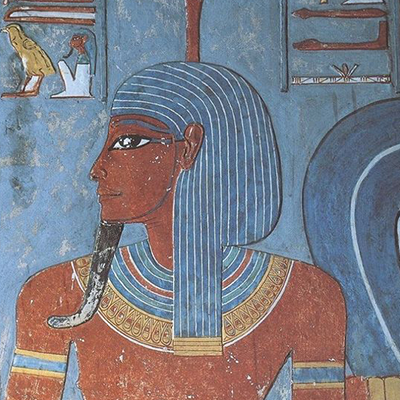
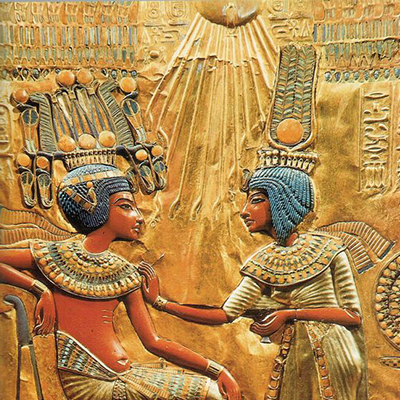
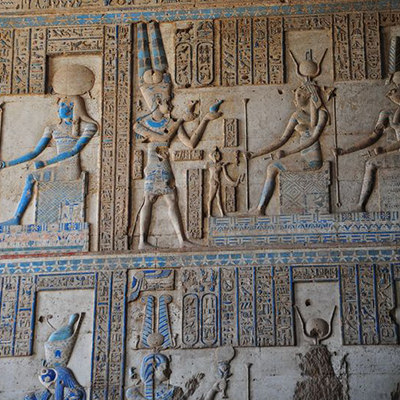
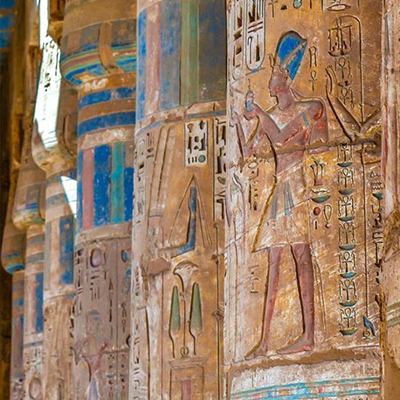
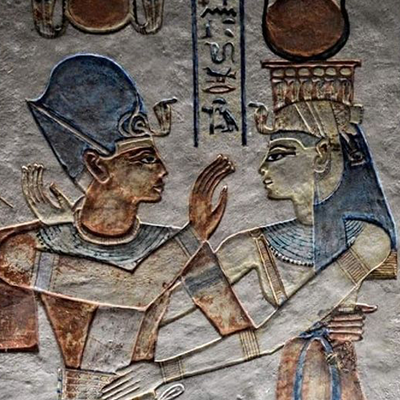
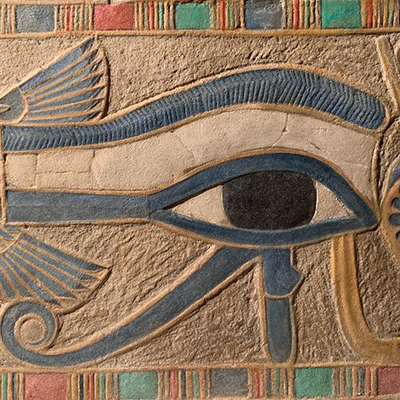
Although EB was already present in Egypt since predynastic times, it was not until the 4th–5th dynasty (around 2500 BCE) that it became widespread. Examples of use in the 5th dynasty (c. 2494–2345 BCE) include the deeply etched hieroglyphs on the reliefs in the pyramid of Unas at Saqqara, which are flled with solid masses of EB, indicating its extensive manufacturing. At those times EB was almost the only blue pigment used in Egypt and the surrounding areas (Riederer 1997; Greco 2022).
As their ancient names suggest, it has been proposed that the ancient bluish vitreous materials may have been developed to replace precious stones such as the very expensive lapis lazuli which was to be imported from distant Afghanistan, and also other rare bluish stones like turquoise (Nicholson 2012). Indeed, in Egypt EB was known as ḫśbd iryt, meaning artifcial lapis lazuli, or artifcial blue (Quirke 2001; Corcoran 2016; Becker 2022), or occasionally “mfkȝ.t”, meaning turquoise (Blom-Böer and Warburton 2020). In the Aegean, the term used was kuwano (κύανος also kuanos and kyanos), meaning dark blue or lapis lazuli (Delamare 2007). It may be worth noting that the Greek term became also the root of the Latin cyanus and the English word «cyan», the latter actually referring to a turquoise hue. Also related to lapis lazuli seems to be the term used in Mesopotamia for EB, i.e., uqnû (or uknû) merku meaning molded lapis lazuli (Delamare 2007). May be worth noting that uqnǔ kūri, meaning lapis lazuli from the kiln, is generally related to glass (Shortland 2012; Becker 2022), and uqnû and the related term zagindurû may also be translated as “gleaming” or “shining” (Busatta 2014; Thavapalan et al. 2016).
Hatton et al. described the extensive production of EB as almost the only blue pigment in Egypt and Mesopotamia during the second millennium BCE. To try to quantify the extent of this production, he estimated that the mass of EB required to paint a single typical temple of the 18th–20th dynasties (c. 1550–1075 BCE), e.g., Medinet Habu at Thebes, should have been roughly 1.4 tons (Hatton et al. 2008). It may be worth noting that another artifcial blue vitreous material occasionally used also as a pigment appeared in Egypt around 1479–1370 BCE, sometimes referred to in the literature as Amarna blue (Tite and Shortland 2003; Shortland et al. 2006b; Scott 2016; Skovmøller et al. 2016). It was produced from cobalt alum found in the Western Desert but its use as a pigment was abandoned at the end of the New Kingdom, i.e., around 1069 BCE (Scott 2016). The use of cobalt as a coloring agent persisted for blue glass (Shortland et al. 2006b). It is noteworthy that EB produced from the New Kingdom seems less prone to turn green as a consequence of decay (Greco 2022). Possibly, the improved
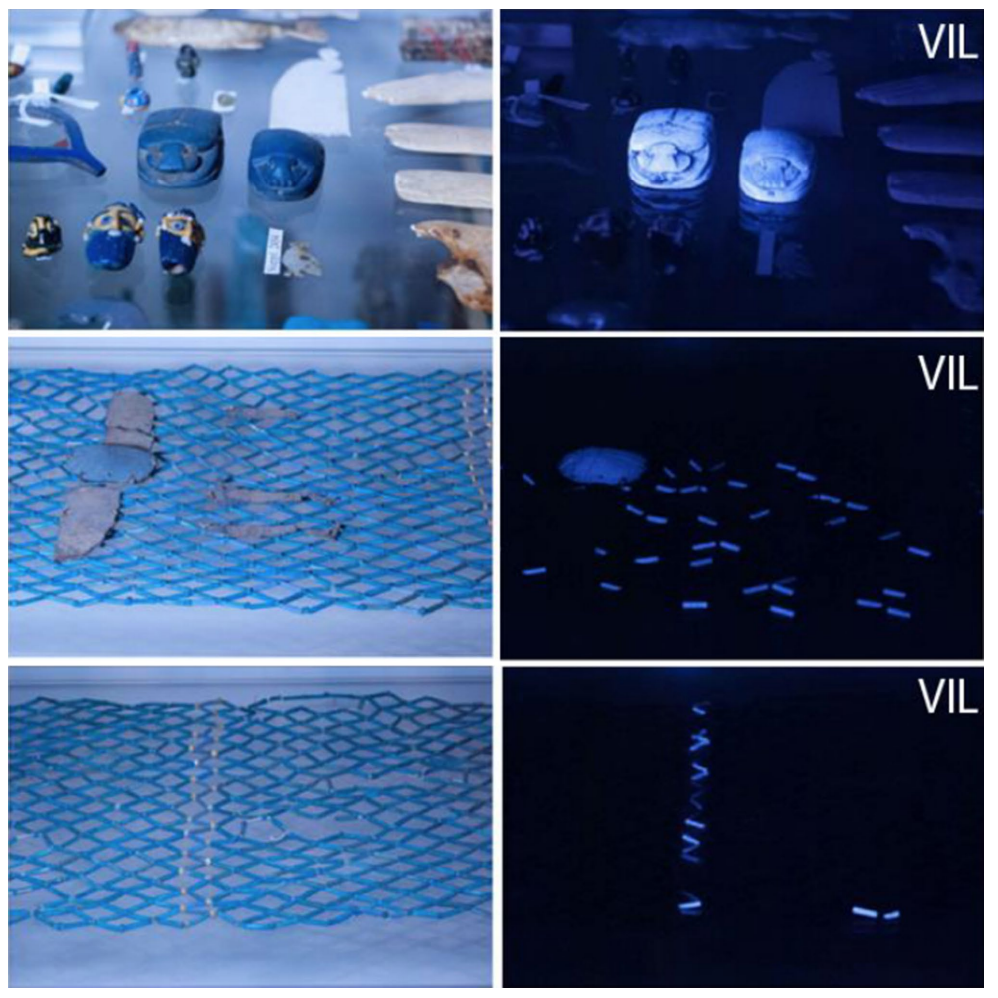
Fig. 13 Some scarabs and mummy nets in Museo Egizio in Turin. The VIL images on the left of each photo indicate the presence of EB as a glowing material. The top VIL shows that the scarabs are made of EB, while the central and the bottom VIL allow to recognize which tubular beads are made of EB and which of Egyptian faience within each net. Reproduced with permission from Masic and Nicola (2021)
resistance could be due to the optimization of the EB production technique as a consequence of the development of glass processing or to the strengthening of the glass matrix due to the use of natron as a fuxing agent (see also Sects. 3.3.11 and 4.2.3). EB has been widely used also in the Aegean, where it has been found in sites of the Bronze Age in the 3rd and 2nd millennium BCE, such as Keros, Knossos, Thera, Mycenae, Pylos, and Tiryns (Kakoulli 2009; Skovmøller et al. 2016).
After the era of the great buildings of the Bronze Age, the occurrences of EB seem to drop signifcantly in the Greek world, reappearing only in the Archaic period, i.e., from the sixth century BCE (Osanna and Rescigno 2022). An explanation can be the lack of massive orders for large buildings. In this regard, Osanna and Rescigno point out that likely in that period the use of EB was not abandoned
Fig. 14 Marble head of an unidentifed fgure from the classical Temple of Artemis in Ephesus (British Museum No. 18720405.121). a Visible image and b green-induced luminescence image, i.e., a specifc variant of the VIL technique which will be detailed in part B of this review (see also Sect. 3.5). Reproduced with permission from Verri (2009)
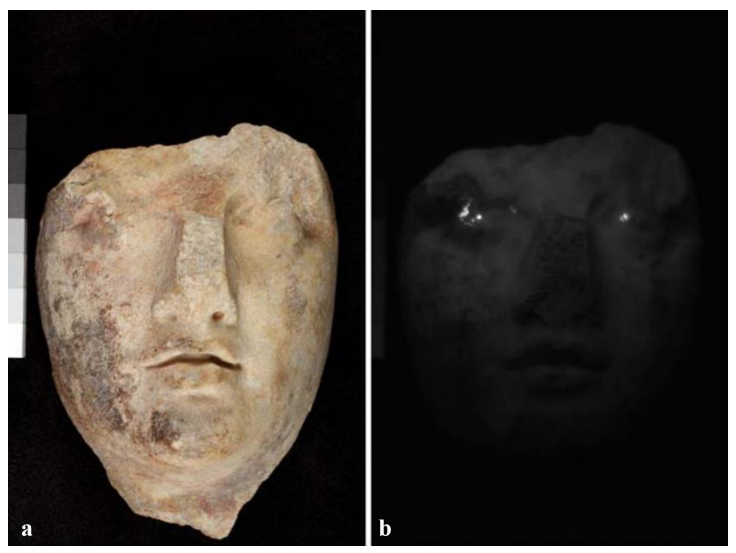
but the pigment was mainly relegated to uses on materials of a labile nature, such as the largely lost wooden objects (Osanna and Rescigno 2022). In classical times, EB has been used to color marbles and statues not only in Egypt but also in the Near East, Greece, and Italy, a noteworthy case being, e.g., the Parthenon (Verri et al. 2010; Osanna and Rescigno 2022). As shown in Fig. 14, the polychromies on statues are very often lost or survive only in traces. However, if they contain EB, it is possible to detect them easily by exploiting its luminescence (Verri 2009; Verri et al. 2010; Skovmøller et al. 2016).
4.1.3 Manufacturing centers and trade in antiquity
EB was a valuable and widespread trade good in ancient times. Its production, use, and trade in antiquity have been the object of some reviews (Tite and Hatton 2007; Kakoulli 2009; Rodler and Kostomitsopoulou Marketou 2022). EB reached places quite far from its production centers. It has been found in the west in sites as old as the eighth century BCE or before, e.g., in Etruria (Baraldi et al. 2015), in Phoenician and Punic settlements including Sardinia (Hölbl 1986; Barnett and Mendleson 1987) and Spain or even in England (Needham and Bimson 1988; Gorton 1996; Cavassa 2018). In a more recent site, i.e., of the third century CE, EB has been detected also as far north as Norway, where it was used as a pigment on a shield of the Bo people (Rosenquist 1959; Scott 2016). The presence of EB in that place is probably due to the trade between the Romans and the northern populations (Rosenquist 1959; Canti and Heathcote 2002).
At frst, the other ancient populations must have imported EB produced in Egypt, but over time the production technology spread (Delamare 2007; Rodler and Kostomitsopoulou Marketou 2022). Many manufacturing centers have, indeed, been proposed in various era and places both inside and outside Egypt. In Egypt, the major centers were identifed in, e.g., the cities of Memphis (Hatton et al. 2008; Cavassa 2018), Amarna (Spurrell 1895; Nicholson 2007; Rodler and Kostomitsopoulou Marketou 2022), and Qantir-Piramesses (Rehren et al. 2001). Minor centers proposed are also a village near Karnak, Thebes, and Zawiyet Umm el-Rakham (Hatton et al. 2008; Skovmøller et al. 2016). Furthermore, Vitruvius also implicitly refers to production in Alexandria in the frst century BCE (Rowland 1999). Outside Egypt, it has been suggested that many production sites have existed, e.g., in Mesopotamia (Hatton et al. 2008; Skovmøller et al. 2016; Zaina et al. 2019), the Urartian zone in Easter Turkey (Ingo et al. 2013; Zaina et al. 2019; Ormanci 2020), Persepolis (Oudbashi and Hessari 2020; Amadori et al. 2021), the Isle of Kos in the Aegean (Panagiotaki et al. 2015; Kostomitsopoulou Marketou et al. 2020; Kostomitsopoulou Marketou 2022), the Etruria area in Central Italy (Bordignon et al. 2007; Brøns et al. 2016), and overall, from roughly the frst century BCE, the Phlegraean Fields in Southern Italy, i.e.,
the ancient cities of Puteoli, Liternum, and Cumae near Naples (Gargiulo 1998; Cavassa et al. 2010; Lazzarini and Verità 2015; Grifa et al. 2016; Cavassa 2018; Osanna and Rescigno 2022). During the Roman Empire, EB could have been produced also in Spain (Rodler et al. 2017) as arguably meant also by Pliny the Elder in Book XXXIII of Naturalis Historia (Bostock and Riley 1857), and possibly in Gaul (Delamare 1997) and Britain (Canti and Heathcote 2002; Clegg 2014). It has been suggested that a signifcant spread of sites for the production of EB took place at least from the Hellenistic period (Kakoulli 2009), i.e., from 323 BCE onward. Furthermore, it has also been suggested that, analogously to glassmaking, only a few centers were actually in charge of the production of EB, while many other workshops processed likely a semi-fnished material imported from there, e.g., as ingots (Panagiotaki et al. 2015; Cavassa 2018; Zaina et al. 2019). So far, only a few production sites have been found in archaeological excavation and have a completely reliable identifcation, e.g., Memphis in Egypt (Cavassa 2018), the Phlegraean area in Italy (Gargiulo 1998; Cavassa et al. 2010; Lazzarini and Verità 2015; Grifa et al. 2016) and probably the Isle of Kos in Greece (Kostomitsopoulou Marketou et al. 2020).
4.1.4 Ancient written sources on Egyptian blue production
No recipes for the production of EB have been found in all the Egyptian texts known so far (Panagiotaki et al. 2015; Fontana et al. 2020), and it has been advanced that the technique used was kept with some secrecy and was handed down orally from generation to generation (Delamare 2007; Greco 2022; Orna and Fontani 2022).
Actually, the earliest known written source about EB production in antiquity has been found in Mesopotamia within cuneiform texts from the library of Ashurbanipal (seventh century BCE, but copy of original texts dating back to the mid-late 2nd millennium BCE) (Forbes 1966; Delamare 2007; Kakoulli 2009). The texts reported a recipe for making uknû merku (Kakoulli 2009). It has to be noted that this frst recipe involved methods that seem more typical of glassmaking (Delamare 2007) and that some passages are not at all clear. Other pre-Roman sources report some data about EB (Kakoulli 2009), and among them, is the valuable description given in the fourth century BCE by Theophrastus in section 55 of De Lapidibus (Eichholz 1965; Katsaros et al. 2010). Theophrastus refers to EB using the still current terminology egyptios kyanos testifying that it was of Egyptian origin.
He also used an adjective meaning «moldable» for EB (Katsaros et al. 2010; Rodler and Kostomitsopoulou Marketou 2022), likely related to the vitreous glass–ceramic features of the material. Furthermore, Theophrastus reports that EB was produced to imitate the native stone (i.e., lapis lazuli) and arguably that it was produced in four hues of blue (i.e., that diferent hues can be produced) from the darker to the lighter according to grain size (Katsaros et al. 2010) (see also Sect. 3.3.3). However, the by far most detailed and popular source available about the production of EB in antiquity is that by Vitruvius in Book VII of De Architectura written around 20–30 BCE (Davidovits 2003; Grifa et al. 2016). It will be described in detail in Sect. 4.2.
4.1.5 Roman times
Analogously to other blue pigments, EB was generally known in Rome as caeruleum (akin to the English adjective cerulean). The term is related to the Latin word caelum and means «the color of the sky» (Busatta 2014). Vitruvius reports within the De Architectura (around 20–30 BCE) that an EB production plant was set up in Italy by Vestorius (Rowland 1999), a wealthy banker and entrepreneur, correspondent of Cicero and Atticus (Davidovits 2003; Osanna and Rescigno 2022). According to Vitruvius the technology to manufacture EB was imported from Alexandria to Puteoli (modern Pozzuoli near Naples see also Sect. 4.2). The description given by Vitruvius is overall consistent with that reported roughly a century later by Pliny the Elder in Book XXXIII of Naturalis Historia (Bostock and Riley 1857).
Pliny seems to refer to some typologies of EB, i.e., caeruleum Aegyptios, caeruleum Vestorianum, and caeruleum Puteolanum, calling the latter also cylon (spelled also coelon or cyanon) (Augusti 1967; Becker 2022; Osanna and Rescigno 2022). He also uses the term lomentum referring to a typology of light blue pigment obtained by washing and grinding EB (see also Sect. 3.3.3) and the term tritum referring to an EB of lower quality probably deriving from grinding leftovers (Becker 2022). Pliny describes the uses of EB as pigment and even seems to suggest its use as a remedy for ulcers. This latter use could be related to the recently discovered antibacterial and regenerative properties of cuprorivaite (see also Sect. 3.6). Pliny reported the prices of the diferent types of caeruleum, but he does not include any type of EB in the list of rare and expensive pigments that had to be supplied by the commissioner of a paint, i.e., colores foridi.
The full list of colores foridi is provided in Book XXXV of Naturalis Historia and includes only minium, Armenium, cinnabaris, chrysocolla, Indicum, and purpurissum (Bostock and Riley 1857; Augusti 1967). However, EB has been often implicitly considered among colores foridi by many authors (Duran et al. 2010; Lazzarini and Verità 2015) that likely considered its price to be relatively high (Damiani et al. 2003). On the contrary, other authors conclude that EB has not at all to be considered among colores foridi and that it likely had to be considered a fairly inexpensive pigment in Rome, pointing out that it was a substitute for more expensive and exotic natural pigments and that it was used also for hidden parts, such as underdrawings (Skovmøller et al. 2016). EB was widespread in Italy since before the Roman times, i.e., in Magna Graecia, e.g., the Tomb of the Diver
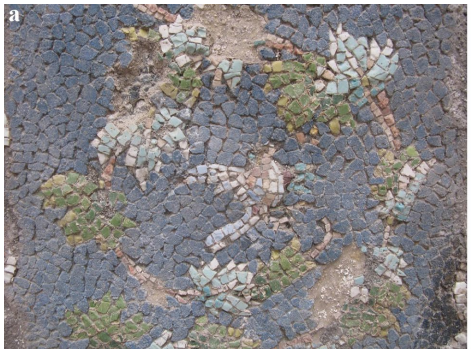
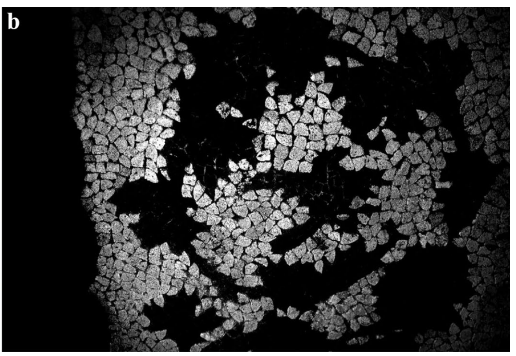
Fig. 15 House of Neptune and Amphitrite in Herculaneum. Nymphaeum. Use of lumps of EB in Roman times to produce mosaics. The centimeter sized tesserae are made of solid EB. a Visible light.
b VIL image acquired in daylight using two NIR-free fashes. Reproduced with permission from Chiari (2018)
at Paestum (Zuchtriegel 2018; Osanna and Rescigno 2022) and extensively among the Etruscans (Bordignon et al. 2007; Baraldi et al. 2015, 2017; Brøns et al. 2016; Ceccarelli et al. 2020). Between the second century BCE and the end of the frst century CE, the use of EB in Roman wall paintings has been thriving (Bracci et al. 2022). EB was widely used in Roman frescoes, but also in many other techniques and on a wide range of supports, e.g., wood, terracotta, and marbles (Rescigno and Sampaolo 2005; Osanna and Rescigno 2022). In mosaics it was used: (a) to paint preparatory underdrawings below mosaics (Verri et al. 2010); (b) to paint mosaic tesserae (Osanna and Rescigno 2022); and (c) from frst century BCE as tesserae made of lumps of vitreous glass–ceramic material (generally used in wall mosaics inside Nymphaea and fountains, see Fig. 15), (Delamare 2007; Boschetti 2011; Chiari 2018). Throughout the Roman Empire, EB has been almost the only blue pigment used in Europe, West Asia, and North Africa (Scott 2016; Sgamellotti and Anselmi 2022). In Italy, it reached possibly its highest difusion at the end of the frst century CE. In fact, from the second century CE, the presence of EB in the area of Rome (e.g., in Ostia Antica) seems to be limited to more simple uses than before, fnding it mixed with other pigments only in contexts of great value (Blümich et al. 2021;
Bracci et al. 2021; Falzone et al. 2021). Similar conclusions were drawn by Fermo et al. (2013) and also the use of lumps of EB in mosaics seems to end after the frst century CE (Boschetti 2011). A fall in the use of EB in Italy at the end of the frst century CE could have been due to many causes, such as local fashion or the troubled political and social period. It may be worth noting the concomitant eruption of Vesuvius near the main Italian sites producing EB. However, according to Delamare, the largest difusion and use of EB was reached only in the third century CE (Delamare 2007). It has been reported that the price of EB dropped in time. In fact, in 301 CE Diocletian (referring to EB as cyaninum vestorianus) regulated its price in the Edict on Maximum Prices setting it at just about one-tenth of the parametrized price referred to by Pliny in frst century CE (Delamare 2007; Cavassa 2018). In the fourth and ffth centuries, the availability of EB seems to decrease even if EB has been reported, e.g., in Roman villas (El Salam and Morgan 2006; Cristini et al. 2010; Piovesan et al. 2016) and catacombs (Delamare 2007; Iannaccone et al. 2015; Bracci et al. 2020; Bartolozzi et al. 2021).
4.1.6 Middle ages
Until quite recently it was a common belief that during the years leading to the collapse of the Western Roman Empire (i.e., during the 4th or ffth century CE) the technological know-how to produce EB got lost and consequently the use of EB quickly ended (Chase 1971; Orna et al. 1980; Lazzarini 1982). However, there is a signifcant number of identifcations of EB in that period and beyond the classical Egyptian–Greek–Roman age, thus seems more appropriate to conclude that during the Early Middle Ages the use of EB dropped signifcantly but did not disappear completely (Delamare 2007; Skovmøller et al. 2016; Linn et al. 2017; Nicola et al. 2018a). However, only a limited number of occurrences seems to have been reported during the sixth century and even less during the seventh century, e.g., in some fourth–sixth century religious buildings in Romania (Iaţcu 2013), in a ffth–sixth century church in northern Italy (Dariz and Schmid 2021), in the ffth–sixth century chorus of the old Basilica Santa Maria antiqua in Rome (Raehlmann 1914; Riederer 1997), in the 6th-century wall paintings from a byzantine church in Israel (Linn et al. 2017), in
sixth century Byzantine encaustic mural paintings in Egypt (Gehad et al. 2015), in ffth–seventh century undercoloring of mosaics in Ravenna (Baraldi et al. 2016), in the seventh century Monument of Santalla de Boveda in Galicia (Blanco-Rotea et al. 2022) and in some illuminated manuscripts (Aceto et al. 2020; Hofmann et al. 2020; Aceto 2022). The reasons why the use of EB sharply declined during the Early Middle Ages are still debated. A possible explanation is related to the almost concurrent medieval crisis of glassmaking (Nicola et al. 2019). Notably, in fact, the discontinuation of EB production in the sixth–seventh century CE (Delamare 2007) seems to coincide with the early stages of the crisis of the closely related production of glass in the seventh–ninth century CE (Shortland et al. 2006a; Phelps et al. 2016). Analogously to what happened for glass, the disappearance of EB could have been related to a shortage of natron, i.e., a key ingredient for the production of both EB and glass (Nicola et al. 2019). The natron shortage could have been triggered by the paralysis of trade that followed the fall of the Western Roman Empire or by the political turmoil involving the main natron production sites (e.g., Wadi al Natrun and al-Barnuj) as a consequence of the surge of Islam (Shortland et al. 2006a). However, it has been pointed out that the Islamic conquest had little efect on people’s everyday lives, with no destruction layers, no changes to settlement patterns and negligible changes in ceramic and glass production (Phelps et al. 2016). Another hypothesis is that a natron shortage could have been due to a climatic change (Shortland 2004; Shortland et al. 2006a) triggered by long-term climatic dynamics (Phelps et al. 2016) or by disruptive events such as the three large volcanic eruptions in 536, 540 and 547 CE that led to the Late Antique Little Ice Age lasting between 536 and 660 CE (Büntgen et al. 2016). Alternative explanations for the disappearance of EB have been expressed by some scholars, e.g., the decrease in the number and quality of newly produced works of art due to the troubled period (Delamare 2007) and the replacement with other pigments increasingly popular in the Middle Ages, such as lapis lazuli and azurite. Notably, in fact, the EB used in the Early Middle Ages and afterward is frequently found not in the pure form but together with another blue pigment, i.e., the very rare and expensive one obtained by lapis lazuli (Gaetani et al. 2004; Bredal-Jørgensen et al. 2011; Beeby et al. 2017; Hofmann et al. 2020). In any case, a certain use of EB has been observed also after the seventh century (Delamare 2007). The main occurrences of EB reported in the eighth to thirteenth century CE are listed in Table 1. Some hypotheses have been put forward to explain this residual use. Some scholars argued that a limited EB production could have survived somewhere for a few centuries. It has been pointed out that some EB produced in the Middle
Age seems of poor quality and low crystallinity (Lazzarini 1982). These features are consistent with a lack of natron (see Sect. 3.3.4). It has also been proposed that possibly some non-traditional manufacturing was developed to avoid or limit the use of natron, i.e., by replacing it with zinc from cementation brass (Nicola et al. 2018a, 2019; Aceto et al. 2020). An example of the ancient use of zinc-rich EB is shown in Fig. 16. Since many of the late fnds of EB are in Northern Italy or close to its border (i.e., Müstair) it has been suggested that a certain production of EB could have survived in that area (Delamare 2007). It has been also pointed out that possibly such a production survived in the Eastern Roman Empire, a zone that was less touched by the political instability that afected the former Western Empire. In this case, EB could have reached Italy through painter-monks of oriental provenance, many of whom are known to have been active in Rome in the Middle Ages (Lazzarini 1982; Nicola et al. 2018a). In this regard, it is interesting to note that the term Venetum was then used to indicate a blue or bluish color (e.g., in the fourth–ffth century by the writer Vegetius in De re militari, Book IV, 37 referring to the camoufage color used for sails and sailors’ clothes) (Spurrell 1895; Reeve 2004). Notably, also Isidore of Sevilla used this term in Book XIX, Caput XVII of Etymologiae which was written shortly before his death in 636 CE and is possibly the last medieval writer that described EB in a treatise. The use of the description of Vitruvius as a source is evident, but EB is referred to as Venetum caeruleum (Spurrell 1895; Riederer 1997; Barney et al. 2006). Since it was common to name a pigment or even a color from its place of origin (e.g., Puteolanum, see the previous paragraph) (Becker 2022), it seems possible that the use of the term Venetum can imply that a blue pigment was produced there or in the surrounding area, or that it arrived in Venice by sea from the mainland Roman Eastern Empire, maybe in raw form (Nicola 2019). At those times Venice was a glassmaking center rising in importance (Whitehouse 2014), and thus it seems possible that the name Venetum is related to a residual production of EB there, since generally EB production centers were bound to glass production centers (see also Sects. 4.2.3 and 4.2.4). However, some other relevant theories exist to explain the use of EB in the Middle Ages. They are related to leftovers that could have remained in storage for some centuries or the pictorial reuse of EB found in excavations. It has to be noted that Hatton calculated that, for the elder fresco in the church of San Clemente in Rome, no less than 35 blue spheres would have been required (Hatton 2008). This would, therefore, imply the availability of fairly large deposits of unused EB (Cavassa 2018). Actually, the discovery of small groups of lumps of raw EB pigment is not uncommon in excavations of Roman sites (see also Sect 4.2.2) (Gaetani et al. 2004; Bensi 2017).
Rendiconti Lincei. Scienze Fisiche e Naturali
Table 1 Main occurrences of EB reported in the eighth to thirteenth century CE
EB in Middle Ages could have also been a recycled Roman material such as other building materials that were looted from Roman ruins (Lluveras et al. 2010). A large number of EB tesserae could be found, e.g., in Roman
mosaics of the frst century BCE-frst century CE such as the one in Fig. 15, or EB may have also been scraped from earlier wall paintings (Settis 2022).
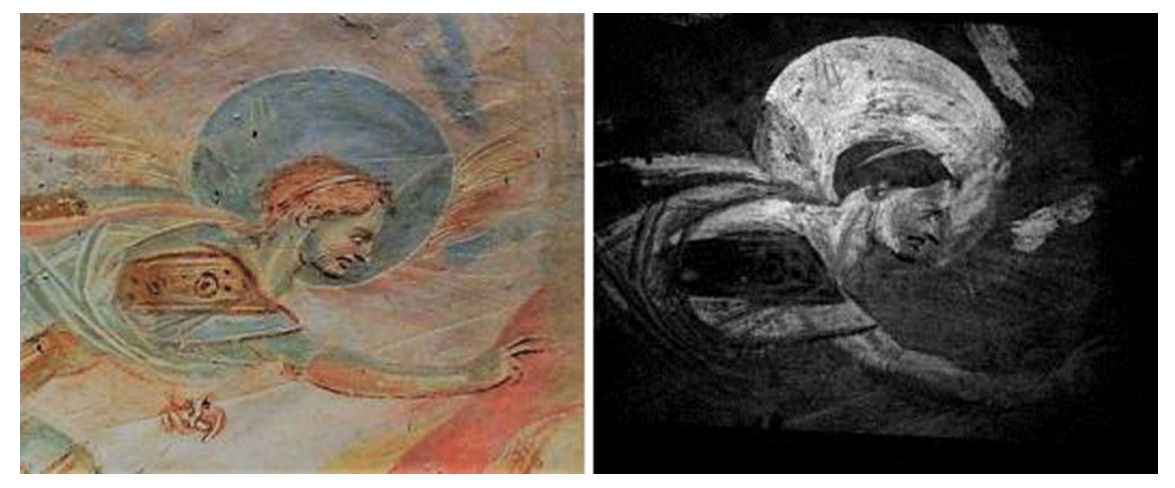
Fig. 16 Use of non-traditional EB in Middle Ages. The Apparizione dell’Angelo a Giuseppe scene. Church of Santa Maria foris portas in Castelseprio. On the right VIL image. The VIL was performed in daylight using two fashes with blocked IR component. Reproduced with permission from Nicola et al. (2018a, b)
Possibly, all explanations are valid, with residual production best explaining the most extensive uses of EB and leftovers or recycling for the occasional ones (Nicola et al. 2018a). It should be noted that another area very rich in late EB fndings is England, especially in terms of illuminated manuscripts (Beeby et al. 2018). However, the high number of occurrences of EB in the
Middle Ages in both Northern Italy and England may be the result of a more focused search for EB that has been made in those zones (Delamare 2007). It is, therefore, hoped that wider future research also elsewhere, will fll important gaps in the general understanding of the use and trade of EB in the Middle Ages and help to improve the hypotheses expressed so far (Delamare 2007). Finally, it is worth noting that the last reference to EB in a medieval treatise seems to date back to the eighth century CE as Vestorianum. It is in the recipe XX Auri confectio within Mappae Clavicula, likely related to the production of brass (Baroni et al. 2013; Settis 2022).
4.1.7 Renaissance
The use of EB did not stop in the thirteenth century. Some few but signifcant fndings are reported in the sixteenth century, after more than two centuries of what seems complete oblivion. Actually, the fndings of EB in the sixteenth century are all strictly related to the Italian Renaissance (Sgamellotti and Anselmi 2022). Baraldi et al. in 2001 reported the frst of them, i.e., some evident traces of EB in Renaissance Bologna on the walls of a villa undergoing restoration (Baraldi et al. 2001b).
In 2011 Bredal-Jørgensen identifed for the frst time the use of EB in an oil painting. It is a painting on wood (i.e., poplar) depicting St. Margaret by the artist Giovanni Battista Benvenuto known as “L’Ortolano” and active in the city of Ferrara, halfway between Bologna and Venice. EB is in a mixture with ultramarine (i.e., lapis lazuli) (Bredal-Jørgensen et al. 2011). Similar fndings were made on two other paintings from the zone of Ferrara dating to the 1520–1530 period. They were both painted by the slightly younger and more famous painter Benvenuto Tisi known as “Il Garofalo” (de Vivo et al. 2019). The frst depicts the Holy Family with Saints Elizabeth, Zacharias, John the Baptist, and possibly Saint Francis (Spring et al. 2019), while the second depicts the Adoration of the Magi (de Vivo et al. 2019). Garofalo was in touch with Titian, Giulio Romano, Ludovico Ariosto, and other leading humanists and notably had worked with Raphael in Rome (de Vivo et al. 2019).
This is a key point, since the most surprising fnding of EB occurred in 2020, i.e., on Raphael’s fresco, the Triumph of Galatea painted around 1512 in Villa Farnesina, Rome (Anselmi et al. 2020, 2022), a detail of which is shown in Fig. 17. The reason for the use of EB in Renaissance has yet to fnd an explanation. It has been suggested that a new interest in an old pigment could have been triggered by Renaissance artists’ attraction to classical Roman culture and materials, which were to be seen in the ruins and the excavations (Anselmi et al. 2020). EB was mentioned in the written testimonies of Pliny and Vitruvius and during Renaissance, a vivid interest surged around Vitruvius De Architectura following its full rediscovery in 1414, due to the Florentine humanist Poggio Bracciolini at Montecassino (Gaetani et al. 2004). It may be worth noting that Raphael had a very deep knowledge of Vitruvius’s work (Anselmi et al. 2020). In fact, Raphael
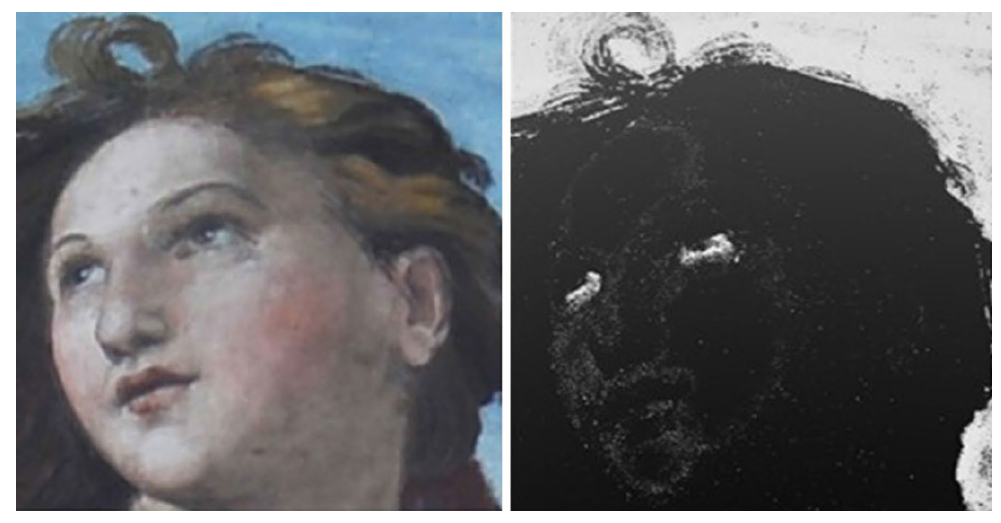
Fig. 17 Left: detail of Raphael’s Galatea. Villa Farnesina, Rome. Right: Red-Induced Luminescence showing EB distribution in white. Reproduced with permission from Sgamellotti and Anselmi (2022)
was in close touch with the elderly Fra ‘Giocondo, publisher in 1511, of the frst illustrated edition of De Architectura (Rowland 2011), and that Raphael in 1514 was also the commissioner of the translation in vernacular of De Architectura by the humanist Fabio Calvo from Ravenna (Fontana et al. 1975). It should also be noted that in 1515 Pope Leone X charged Raphael with the title of praefectus marmorum et lapidum omnium, i.e., prefect of all marbles and stones, a role that comprise the supervision of ancient monuments and ruins, which denotes Raphael’s interest and familiarity in handling ancient and archaeological materials (Shearman and Staf 2003). Finally, it cannot be ruled out that Raphael directly obtained archaeological lumps of EB from the antiquity market, since he was also a collector of antiquities and was in touch with many other collectors such as his friend Agostino Chigi (Zuccari 2022). No further reliable occurrence of EB has been reported so far beyond the Italian Renaissance until the development of the modern synthesis of the pigment in the nineteenth and twentieth centuries CE (Pisareva et al. 2021). The only exceptions seem to need confrmation, since in both cases, the authors infer the presence of EB by relying on techniques that are not conclusive. They are the following:
- two sculptural models, i.e., a papier-maché head and an unfred clay crucifx both attributed to the 17th-century workshop of Alessandro Algardi (Salerno 1997; Bensi 2017; de Vivo et al. 2019). In this case, the author refers to the identifcation of EB by polarized-light microscopy only, without supporting further analytical data (de Vivo et al. 2019)
- an 18th-century Coptic icon depicting the Angel Michael (Sakr et al. 2016). In this case, EB has been identifed using SEM–EDX and FT-IR that in this situation seem however not sufcient for a univocal identifcation of EB.
Confrmation of these occurrences would be of high interest, since they could represent the last known preindustrial uses of EB. The fnd of EB in Raphael’s Triumph of Galatea constitutes the earliest known use of EB in a Renaissance painting (Anselmi et al. 2020).
The enthusiastic discovery of EB in the palette of one of the most iconic Italian painters has been the starting point of new perspectives and brought to the birth of the BLUENET project, as a joint efort to improve the knowledge of the past use of EB and foster its applications in the present and the future (Sgamellotti and Anselmi 2022).
4.2 Egyptian blue: ancient production and Vitruvius’s
4.2.1 Overview
Vitruvius’s recipe to produce EB is included in Book VII of his De Architectura which was written around 20–30 BCE (Davidovits 2003). The passage is the following:
“Methods of making blue were frst discovered in Alexandria, and afterwards Vestorius set up the making of it at Puzzuoli. The method of obtaining it from the substances of which it has been found to consist, is strange enough. Sand and the fowers of natron are brayed together so fnely that the product is like meal, and copper is grated by means of coarse fles over the mixture, like sawdust, to form a conglomerate. Then, it is made into balls by rolling it in the hands and thus bound together for drying. The dry balls are put in an earthen jar, and the jars in an oven. As soon as the copper and the sand grow hot and unite under the intensity of the fre, they mutually receive each other’s sweat, relinquishing their peculiar qualities, and having lost their properties through the intensity of the fre, they are reduced to a blue color.” (Riederer 1997).
Substantially, Vitruvius’s recipe implies that EB was obtained by mixing some water, a sand (i.e., harena), fos nitri, and flings of metallic copper. The paste produced by the mixture was then shaped in the form of balls that were then dried and fred in terracotta vessels.
There is general consensus about the fact that Vitruvius’s recipe is the most detailed literary source known about the ancient production of EB (Riederer 1997; Delamare 2007; Kakoulli 2009). However, it should be emphasized that, actually, Vitruvius does not give any information about the temperatures involved, does not describe the ingredient unambiguously nor indicate their quantity or ratio (Grifa et al. 2016; Dariz and Schmid 2021, 2022; Osanna and Rescigno 2022). He gives also no information about the dimensions of the “balls” of EB to be produced or if and how they have to be ground and reprocessed. For this reason, some passages of the ancient method of production remain unclear or debated even though modern chemical analyses extensively carried out from the nineteenth century to the present day have signifcantly improved the understanding of the ancient technique of production. In any case, it seems likely that the exact production technique changes quite signifcantly depending on the place and time. In this regard, it has to be noted that EB existed long before the founding of Alexandria (Augusti 1967), although possibly Vitruvius referred to a specifc type of caeruleum.
4.2.2 Shape of the pellets
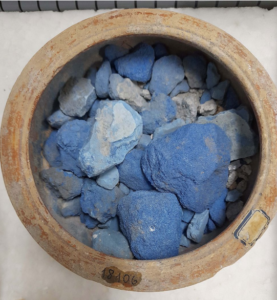
It seems that in the Roman Empire raw EB (at least the highquality one) generally circulated in form of small spheres of around 15–20 mm in diameter (Dariz and Schmid 2022) called pilae (Augusti 1967; Osanna and Rescigno 2022) as, e.g., the EB found in some sunk cargoes (Delamare et al. 2004). However, EB has been found in archeological sites of a wide range of times and places as masses of various sizes. They have been defned, e.g., pellets (Kostomitsopoulou Marketou et al. 2020), lumps (Boschetti 2011), balls (Mirti et al. 1995), small blocks (Osanna and Rescigno 2022), cakes (Pagès-Camagna and Colinart 2003; Hatton et al. 2008; Ingo et al. 2013; Ormanci 2020), ingots of various shape (Panagiotaki et al. 2015; Zaina et al. 2019), “loaf of bread” (Bouquillon et al. 2007; Panagiotaki et al. 2015), disks, or spheres (Panagiotaki et al. 2015). Some irregularly shaped lumps of EB from Pompeii are shown in Fig. 18.
Fig. 18 Bowl containing EB pigment found in Pompeii excavations. First century CE. Soprintendenza Pompei, inv. 18106. Reproduced with permission from the Italian Ministry for Cultural Heritage and Activities
4.2.3 Temperature
The temperatures used in antiquity to produce EB have been estimated by many authors who generally agree on a range of 850–950 °C (Tite et al. 1987; Riederer 1997; Bianchetti et al. 2000; Mazzocchin et al. 2004). Pagès-Camagna and Colinart proposed a range slightly higher, i.e., 870–1080 °C (Pagès-Camagna and Colinart 2003). A temperature even higher, in the range of 950–1100 °C has been evaluated by Grifa et al. studying crucibles used in the manufacturing center in Cumae (Grifa et al. 2016) and by Aliatis et al. (1000–1100 °C) studying Roman pigments of the Vesuvian area (Aliatis et al. 2010). On the opposite Jaksch et al. in a study on Egyptian EB deduced that the temperature of production should have been below 742 °C due to the presence of pyrite in some samples (Jaksch et al. 1983).
4.2.4 Natron and other fuxes
Notably, some disagreement exists about the translation of the Latin terminology «fos nitri», although it is generally accepted that it is associated with a typology of salt. The word «fos» (literally «fower») is generally understood as «high quality» or «refned» (Mottana 2006), but it cannot be ruled out that it simply means something like «eforescences» (Crosland 2004). The term «nitri» is more debated. As suggested also by the description of nitrum given by Pliny the Elder in Book XXXI of Naturalis Historia, it is generally agreed that fos nitri refers reliably to natron (Gitton-Ripoll 2009), i.e., a salt mainly constituted by Na2CO3·10H2O with minor amounts also of NaHCO3, chlorides, sulfates, other carbonates and impurities (Shortland 2004; Shortland et al. 2011). Natron is a naturally occurring salt generally coming from the huge crusts that form in and around the periodic lakes (sebka) and rivers (wadi) in the desert, e.g., in Egypt at Wadi El Natrun (Lucas and Harris 1962) and al-Barnuj (Shortland 2004; Mottana 2006; Shortland et al. 2011). It has been pointed out that other exploitable sources were also at lake Van in Turkey (Dardeniz 2015) and maybe also elsewhere. Quite recently, e.g., it has been found as eforescences in fumaroles at Mt. Vesuvius and in the Sicilian volcanoes (Mottana 2006). Natron was extensively produced in Egypt and used for many purposes, such as detergent, disinfectant, or desiccant (e.g., in mummifcation) (Abdel-Maksoud and El-Amin 2011; Dardeniz 2015). Its use for the production of glass spread from Egypt in the early 1st millennium BCE and has been widely exploited in Roman times (Shortland et al. 2006a). It was such an important commodity as to become a state monopoly in Ptolemaic times (Mottana 2006). In EB production, analogously to glassmaking, the role of natron is that of a fux, i.e., a substance that lowers the melting point of silica and allows the melt-fux synthesis (see also Sect. 3.3.4). The presence of appreciable amounts of potassium in addition to sodium in most of the ancient EB samples has been related to the use of other alkaline fuxes diferent from natron, such as plant ash or soda-rich plant ash, the latter from plants, such as Salsola soda and Anabasis articulata, growing in coastal, or saltrich zones (Hatton et al. 2008).
Similar uses of natron and other fuxes are well-known and established in the history of glassmaking (Shortland et al. 2006a; Hatton et al. 2008; Jackson et al. 2018). Other possible sources of potassium in EB are feldspar from the sand used (Hatton et al. 2008) or from terracotta crucibles (Grifa et al. 2016; Nicola et al. 2019). However, it is not possible to completely rule out that nitri in Vitruvius’s recipe referred actually to other salts diferent from natron and known in antiquity, such as saltpeter (KNO3) (Pagès-Camagna et al. 1999; Barnum 2003; Skovmøller et al. 2016; Dariz and Schmid 2021). However, the translation with saltpeter would not only contradict the general consensus that relates nitri to natron (Mottana 2006; Gitton-Ripoll 2009) but would also seem inconsistent with the preponderant presence of sodium generally found in Roman EB (Hatton et al. 2008; Fontana et al. 2020). It may be worth noting that in some translations of De Architectura, i.e., the one of 1826 by Gwilt (still very widespread) «fos nitri» seems to be translated fairly loosely with «fower of sulphur» (Gwilt 1826). This type of interpretation seems erroneous and devoid of any foundation. Natron was often impure due to chlorides, sulfates, and calcium carbonate (Turner 1956; Davidovits 2003; Pradell et al. 2006; Giménez et al. 2017). It is possible that such impurities played a key role in EB production. Calcium could be present as a natural impurity of natron but also as a consequence of the intentional adulteration of natron with lime as reported by Pliny the Elder in Book XXXI of Naturalis Historia (Bostock and Riley 1857; Davidovits 2003). The presence of chlorides has been pointed out as a possible cause of the formation of a green product as a result of the synthesis (Giménez et al. 2017), even if the production of the Egyptian green pigment has been generally related to other specifc features, e.g., a higher temperature of production or an increased amount of fux (and possibly calcium) in comparison to EB (Hatton et al. 2008; Grifa et al. 2016).
4.2.5 Sand and source of calcium
The presence of calcium in natron could account for the lack of a calcium-bearing ingredient in Vitruvius’s recipe (Davidovits 2003). However, the general consensus is that, similar to what happened in glass production, the main source of calcium in Vitruvius’s EB was a specifc type of sand containing some CaCO3 already in the proper ratio with SiO2 (Mazzocchin et al. 2004; Lazzarini and Verità 2015; Fontana et al. 2020). Indeed, the two main sources of sand for glassmaking reported in Roman treaties are both relatable to siliceous sand, rich in calcium carbonate and low in iron (Turner 1956). The most famous of them is at the mouth of the River Belus on the Syrian coast and is referred to by Strabo, Pliny, Josephus, and Tacitus, while the other is found on the seashore deposit mentioned by Pliny near the mouth of the River Volturnus between Cumae and Liternum, north–west of the ancient harbors of Pozzuoli and Naples (Turner 1956). The main sites for the production of EB in Italy have been found exactly in the same area. This fact strongly supports the hypothesis that the sand used to produce EB and referred to by Vitruvius was the same used for glassmaking and was the source of both calcium and silica (Lazzarini and Verità 2015; Rodler and Kostomitsopoulou Marketou 2022). The use in diferent places and periods of quartz pebbles or sand as a source of silica for EB has been taken into account and described difusely by many authors (Jaksch et al. 1983; Pagès-Camagna and Colinart 2003; Tite and Shortland 2003; Hatton et al. 2008; Ingo et al. 2013; Panagiotaki et al. 2015).
4.2.6 Source of copper
The copper needed to produce EB could have been from copper metal, as reported by Vitruvius, but it has been pointed out that also copper ores may have been used (Jaksch et al. 1983; Hatton et al. 2008; Rodler and Kostomitsopoulou Marketou 2022). They could be, for example, malachite, e.g., from Sinai (Rademakers et al. 2017; Gouda et al. 2020) or roasted sulphidic copper ores (Dariz and Schmid 2021, 2022). Some specifc studies to identify the source of the copper ore used have been recently performed using, e.g., lead isotopes data (Rademakers et al. 2017; Rodler et al. 2017). However, copper very likely has also been sourced from scraps of alloys as indicated by the presence of some peculiar elements reported in many archaeological samples of EB. The chronological succession of these occurrences fts well with the chronological development of metallurgy, i.e., meaningful amount of arsenic has been found in the most ancient samples of EB (related to arsenical bronzes), followed by tin (bronzes), lead (leaded bronzes) (Kaczmarczyk and Hedges 1983; El Goresy et al. 1998), and fnally zinc (orichalcum or brass) (Nicola 2019).
4.3 Chinese blue and Chinese purple
Even if a technology transfer from Egypt to China could not be ruled out (Chiari and Scott 2004; Berke et al. 2010) it is most likely that the development of CB and CP occurred in China independently of EB, roughly two and a half millennia after the development of EB in Egypt (Berke 2007; Liu et al. 2007; Xia et al. 2014). Xia et al. conclude that CP and CB were developed in the southeast of Gansu province, China and that the trajectory of their usage follows the route of the development of the Qin State and Empire (Xia et al. 2014). It has been suggested that the difusion of CB and CP could be connected with the developments of Taoism and alchemy, since the synthesis technology of barium–copper silicates could be related to the production of high refractive index glasses (artifcial jades) by Taoist monks and alchemists (Thieme 2001; Liu et al. 2007; Li et al. 2015a, b).
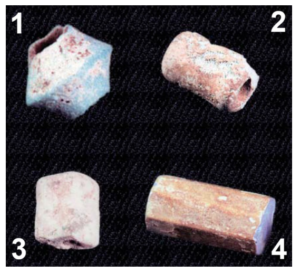
Fig. 19 Bead 1 (777–766 BCE) contains CP and lapis lazuli blue within a faience layer. Bead 2 (eighth–sixth century BCE) contains CB and lapis lazuli blue within a faience pigment layer. Origin: the archaeological excavation site Li County (Northwestern China). Bead 3 (770–476 BCE) is composed of a heterogeneous, compact blue body of CB. It is part of the class of the sinter minerals rich in lead and barium. Octagonal stick 4 (ffth–third century BCE) is composed of equally colored sinter material rich in lead and barium, partly crystallized and partly glassy with a decomposed, partly whitish surface (colour fgure online). Reproduced with permission from Berke (2007)
The earliest occurrences of barium–copper silicate pigments known so far are from beads that date back to the beginning of the Spring and Autumn period (770–476 BCE) (Ma et al. 2006; Berke 2007; Qin et al. 2016; Zhang et al. 2019). The oldest known objects that contain artifcial barium–copper silicates are, indeed, faience tubes, beads, and other decorative objects, such as octagonal sticks (see, e.g., Fig. 19). They date from the Eastern Zhou Dynasty (770–255 BCE) to the Warring States period (475–221 BCE) (Ma et al. 2006; Xia et al. 2014). CB and CP, analogously to EB, were actually at frst used to mold small objects, having a production technology closely related to that of ancient faience, glazes, and glass (Ma et al. 2006; Li et al. 2015b; Wang et al. 2017). The fuxes used for the production of CB and CP were mainly lead compounds, e.g., lead metal, sulfdes, oxides, or carbonates (Li et al. 2015a). It has been suggested that lead additives have been preferred likely because they can promote the thermal decomposition of the otherwise stable BaSO4 (barite) that is one of the main natural sources of barium and is widespread in the area of production of ancient barium–copper silicates pigments (Wiedemann and Berke 2001; Xia et al. 2014). However, Qin et al. have pointed out with a series of simulation experiments how the most likely source of barium for the Fig. 19 Bead 1 (777–766 BCE) contains CP and lapis lazuli blue within a faience layer. Bead 2 (eighth–sixth century BCE) contains CB and lapis lazuli blue within a faience pigment layer. Origin: the archaeological excavation site Li County (Northwestern China). Bead 3 (770–476 BCE) is composed of a heterogeneous, compact blue body of CB. It is part of the class of the sinter minerals rich in lead and barium. Octagonal stick 4 (ffth–third century BCE) is composed of equally colored sinter material rich in lead and barium, partly crystallized and partly glassy with a decomposed, partly whitish surface (colour fgure online). Reproduced with permission from Berke (2007) Rendiconti Lincei. Scienze Fisiche e Naturali 1 3 production of barium–copper silicates should have been the rarer witherite deposits (i.e., BaCO3) also present in the area (Qin et al. 2016). Analogously to what happened for EB the source of copper could have been sometimes also copper alloys such as bronze as suggested by the platelet-like crystals of BaSnSi3O9 detected on the mural painting of a tomb in Luoyang City, Henan Province, China, dated to Western Han Dynasty (206 BCE–8 CE) (Zhang et al. 2019)
It seems somehow unclear which appeared frst between CP and CB. Currently, the general consensus seems to be that CP has been developed frst (Xia et al. 2014; Qin et al. 2016). According to Xia et al. CP has been detected on fnds dating to the beginning of the Spring and Autumn period (about 770 BCE), while CB should have appeared only during the early to mid-Warring States period (i.e., about three hundred years later) (Xia et al. 2014). However, Berke previously suggested that CB and CP appeared both around 800 BCE and that at frst CB was used in preference, being replaced by CP as the preferred pigment around 400 BCE (Berke 2007; Berke et al. 2010). The difculty of drawing a clear boundary between CB and CP production and use may be due to the fact that CB and CP are frequently found in the same sample. This is because the BaO–CuO–SiO2 system is more complex than the CaO–CuO–SiO2 one and can lead to the formation of multiple compounds. Actually, CB and CP are often found together and are occasionally found also in association with another blue copper–barium silicate pigment based on BaCu2Si2O7 and named Chinese dark blue (Xia et al. 2008, 2014; Berke et al. 2009) (for further details see also Sect. 3.1.2 Composition of Chinese Blue and Chinese Purple). Since when CP has been developed blue pigments were quite available in China (i.e., azurite), Xia et al. proposed that CB and Chinese dark blue were developed as by-products of the production of CP (Xia et al. 2014). In this view, the fact that some CB has been reported also on more ancient fndings could be explained, since CB (i.e., efenbergerite) is much more stable than CP (i.e., colinowensite) and also of Chinese dark blue, i.e., scottyite (Berke et al. 2009). Thus, the CB identifed on ancient objects could be linked to the decay of CP (Berke 2007). Furthermore, it is anyway expected that efenbergerite can better survive in time on ancient objects in comparison with the other barium–copper silicates even in the case that, i.e., it was present only as a minor component in the ancient freshly produced CP pigment (Berke et al. 2009; Xia et al. 2014). In the late Warring States period, both CP and CB start to be found in greater abundance as pigments in paintings as well as in glazed objects and as compact body artifacts (Xia et al. 2014; Zhang et al. 2019). The Terracotta Army of the frst Emperor of the Qin dynasty, Qin Shi Huang, (about 220 BCE) was painted largely with CP, while azurite has been in general used for the blues (Herm et al. 1995; Thieme 2001; Blänsdorf and Xia 2006; Ma et al. 2006; Berke 2007; Bonaduce et al. 2008). Examples of warriors wearing robes painted with CP are reported, i.e., by Liu et al. (2007) and by Berke (2007). The use of barium–copper silicate pigments found its peak between the end of the Warring States period and the end of the Eastern Han Dynasty (220 BCE–220 CE) (Xia et al. 2014). The use of CB and CP seems to be limited to some regions of China (i.e., Shaanxi, Henan, Gansu, Hebei, Shandong, and Jiangsu provinces) (Xia et al. 2014). Some occurrences of CB outside China were also reported, such as numerous tubular faience beads and a piece of glass unearthed in Japan, dating back to the centuries 1st BCE–2nd CE (Takayasu 2002). However, as there is no archaeological evidence of the use of CB and CP in the ancient Korean peninsula, they are likely related to travelers and trade (Xia et al. 2014). The production and use of barium–copper silicate pigments seem to end with the end of the Han Dynasty when the Chinese Empire has been divided up again (Berke et al. 2009). According to Xia et al., after the fall of the Eastern Han Dynasty (220 CE) the lead barium glass industry declined and external lead silicate glass became the mainstream. The manufacture and use of CP and CB wane accordingly (Xia et al. 2014). Liu et al. suggest that a concomitant reason for the abandonment of CP and CB may also have been the coeval resurgence of Confucianism, a philosophy more focused on human society and with little interest in materials and natural science (Liu et al. 2007). Contrary to what happened for EB, no further occurrences of CB or CP have ever been reported at any time. Their production technology and existence as pigments or material have been completely forgotten and lost for about 1750 years until their recent rediscovery, respectively, in the 1980s and 1990s (FitzHugh and Zycherman 1983, 1992).
Acknowledgements
We are thankful to Enrico Ferraris, Egyptologist and Curator at the Museo Egizio in Turin, for his essential help in the understanding of Sethe’s translation of the 18th dynasty text about “blue bread”. We are also grateful to Daniela Comelli, (Physics Department of the Polytechnic University of Milan) and Paolo Tomassini (École française de Rome, Centro Studi Pittura Romana Ostiense) for valuable comments and discussion. We express our deep gratitude to the BLUENET project, to the Academia Nazionale dei Lincei—Centro linceo di ricerca sui beni culturali Villa Farnesina (CERIF), and to Antonio Sgamellotti, Director of CERIF. Funding Open access funding provided by Università degli Studi di Torino within the CRUI-CARE Agreement. Data availability The authors confrm that the data supporting the fndings of this study are available within the article [and/or] in the articles in the reference list. Open Access This article is licensed under a Creative Commons Attribution 4.0 International License, which permits use, sharing, adaptation, distribution and reproduction in any medium or format, as long as you give appropriate credit to the original author(s) and the source, provide a link to the Creative Commons licence, and indicate if changes were made. The images or other third party material in this article are included in the article’s Creative Commons licence, unless indicated otherwise in a credit line to the material. If material is not included in the article’s Creative Commons licence and your intended use is not permitted by statutory regulation or exceeds the permitted use, you will need to obtain permission directly from the copyright holder. To view a copy of this licence, visit http://creativecommons.org/licenses/by/4.0/.