
A new article has just been published in The Times:
“Blue was the colour for Pompeii’s priciest paint”.
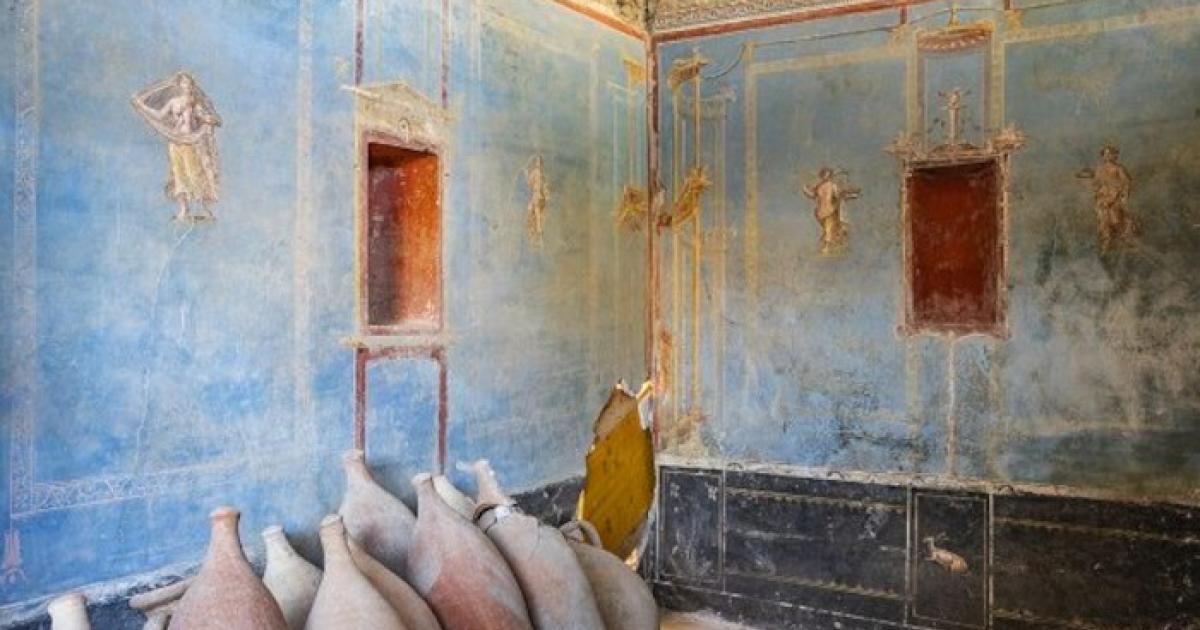
It explores how a wealthy Pompeian family lavishly covered an entire sacred room with the ultra-expensive Egyptian blue pigment in the 1st century AD — a true display of ancient luxury and status. You can read the full article here:
https://www.thetimes.com/world/europe/article/blue-was-the-colour-for-pompeiis-priciest-paint-stffn8hsj
English version (short summary of the article):Blue was the colour for Pompeii’s priciest paint In 1st-century Pompeii, a wealthy family painted an entire small sacred room (sacrarium) in Regio IX entirely with Egyptian blue — the most expensive synthetic pigment of antiquity. A new study (published in npj Heritage Science, March 2026, by MIT, Pompeii Archaeological Park, and University of Sannio) quantified it for the first time: 2.7–4.9 kg of pigment was used on the walls, costing 93–168 denarii — roughly equivalent to 50–90% of a Roman legionary’s monthly salary, or up to twice his annual pay in extreme estimates. Egyptian blue (known as caeruleum) was synthetically produced from sand, copper, and other ingredients, imported mainly from Egypt and the eastern Mediterranean. Rare and difficult to make, it symbolized extreme wealth, divine status, and luxury. Blue was exceptionally uncommon in Pompeii and reserved for the most prestigious spaces. This “Blue Room” highlights how the elite were willing to invest heavily in fashionable, high-status decoration for private religious areas.